
8 min read
Rail 2: Crash walls for train carbodies
This is part 2 of our series on rail aluminium components, where we explore critical structural elements used in modern train manufacturing....
2 min read
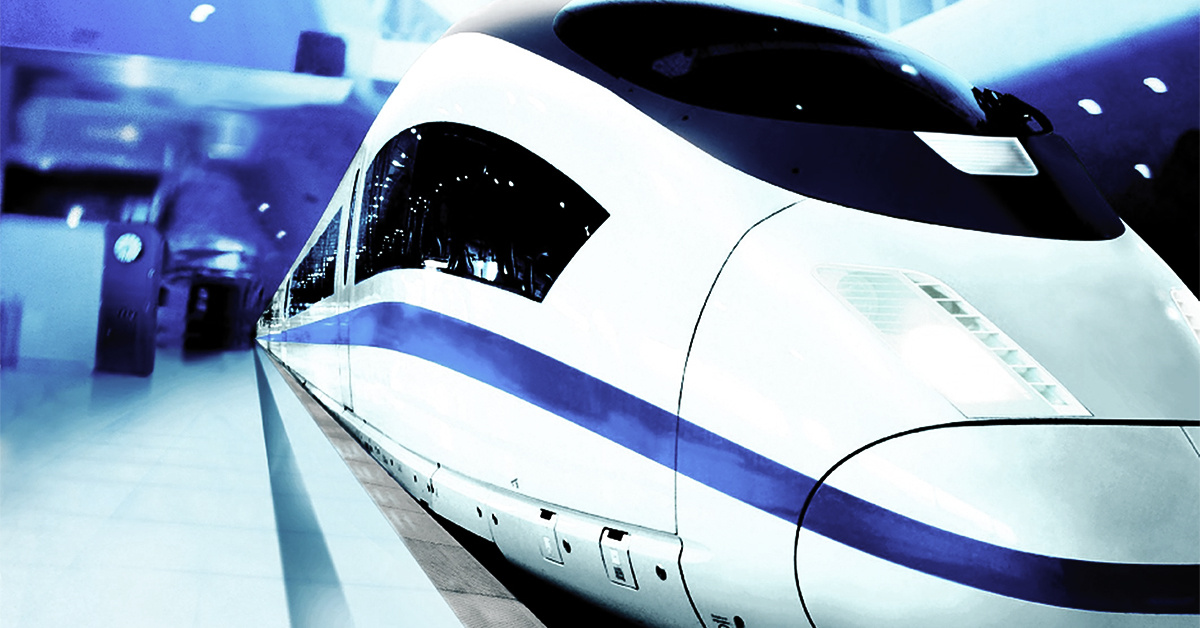
This is part 2 of our series on rail aluminium components, where we explore critical structural elements used in modern train manufacturing. Following our look at curved vertical pillars, we turn our attention to one of the most vital safety assemblies in any passenger train: crash wall components.
As passenger rail operators push for higher speeds, improved fuel efficiency, and uncompromised passenger safety, crashworthiness design has become a core engineering pillar for rail OEMs. Modern train car bodies must balance lightweight construction with the ability to absorb massive amounts of kinetic energy during collision scenarios.
At the heart of this safety architecture are aluminium crash walls. These are components where precision bending, heat treatment, and certified welding must work seamlessly together to meet strict crashworthiness standards.
At Sjolund, we specialise in precision profile bending and complete process management for complex aluminium extrusions used across high-speed, regional, and metro rail platforms. In this article, we examine the function of crash walls in train car bodies and why controlling every step of their manufacture is essential for vehicle safety.
In modern railway design, crashworthiness relies on a controlled deformation strategy. Rather than creating an unyielding structure, engineers design front-end car bodies with dedicated deformation zones (crumple zones) that compress predictably in an impact, absorbing energy before forces reach the driver cab or passenger compartment.
Located behind primary absorption devices like anti-climbers and collapse tubes, the crash wall acts as a rigid safety bulkhead. It fulfills several critical safety functions:
Because these walls are subjected to dynamic multiaxial forces, their geometric profiles are often complex, requiring curved extrusions that match aerodynamic front-end designs while maintaining strict mechanical strength requirements.
Aluminium alloys have become the material of choice for crash walls and surrounding carbody parts. They offer key benefits for rail manufacturers. Some of these are:
High strain energy absorption: Aluminium exhibits excellent energy absorption per unit mass, making it ideal for crash structures where weight reduction directly impacts energy consumption and track wear.
Complex profile integration: Extrusion processes allow for multi-hollow, stiffened profile shapes that consolidate multiple structural parts into a single continuous profile.
Superior corrosion resistance: Long-term resistance to environmental weathering, critical for structural safety over a 30- to 40-year vehicle operational lifespan.
However, transforming high-strength aluminium extrusions into precise, crash-ready curved structures requires tight control over material state and design.
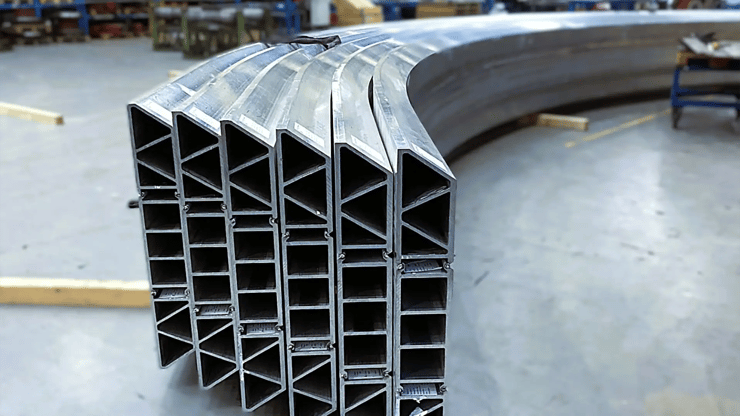
Producing curved structural parts for crash walls is significantly more demanding than standard profile bending. Achieving compliance with OEM manufacturing tolerances requires overcoming three major technical hurdles:
1. Controlled profile bending without wall collapse
Crash wall profiles often feature complex cross-sections with internal ribs and thin wall sections. Bending these large-section extrusions to specific radii requires advanced bending technology and custom tooling to prevent wrinkling, cross-sectional collapse, or wall thinning that could compromise energy absorption under impact.
2. Temper transition (T4 to T6 heat treatment)
To achieve the best result, bending is frequently performed while the aluminium is in the formable T4 temper. Once curved, the component must undergo artificial ageing to reach the T6 temper, achieving the specified full tensile and yield strength within a controlled and well-documented process. Managing thermal distortion and springback during this heat treatment process is crucial to maintaining strict dimensional accuracy.
3. Tight tolerances for downstream assembly
Crash walls are welded directly into the main carbody shell. Any minor deviation in curve radius or profile geometry can cause issues during the final assembly. High-precision 5-axis CNC milling post-heat treatment ensures critical interface dimensions, hole patterns, and welding accuracy to meet exact tolerances.
8 min read
This is part 2 of our series on rail aluminium components, where we explore critical structural elements used in modern train manufacturing....

13 min read
Curved aluminium can give a building a distinctive architectural expression. It can soften transitions, shape facades, frame entrances, and create...
9 min read
This is part 1 of our series on rail aluminium components, where we explore critical structural elements used in modern train manufacturing. As rail...